

B.Tech

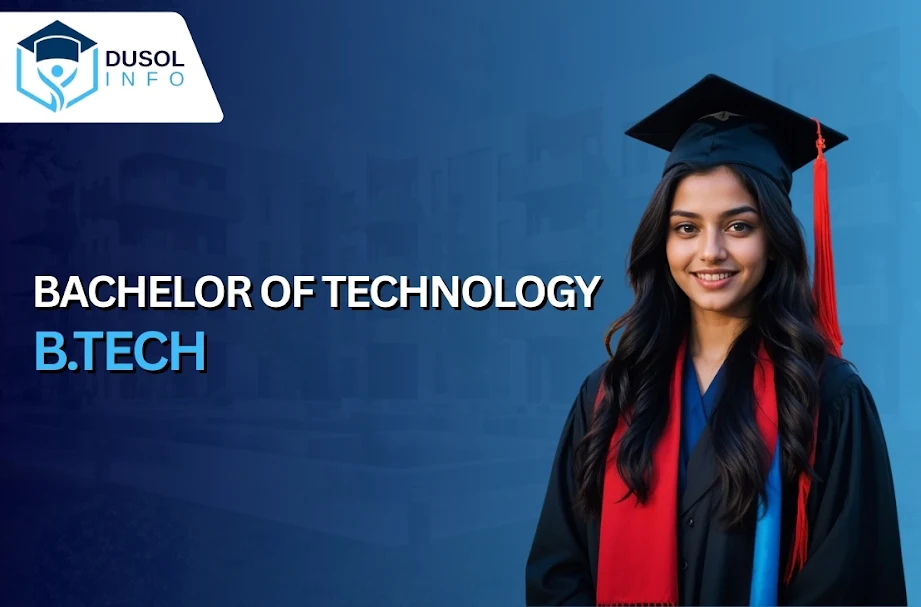
Bachelor of Technology (B.Tech.)

The Bachelor of Technology (B.Tech.) is a 4-year undergraduate program designed to provide in-depth technical knowledge, practical skills, and problem-solving abilities in various branches of engineering and technology. The program prepares students for careers in engineering, research, development, and technology management, equipping them with the expertise needed to excel in both industry and academia.

B.Tech. combines theoretical concepts, laboratory practice, project work, and industrial training, ensuring graduates are well-prepared for real-world technological challenges.

Program Overview

The curriculum covers core engineering principles, specialization courses, skill-based training, and research projects, allowing students to develop technical expertise, innovation, and leadership qualities.

Major Areas of Study (Based on Specialization)

Core Engineering & Fundamentals

  • Engineering Mathematics
  • Physics & Chemistry for Engineers
  • Mechanics & Thermodynamics
  • Basic Electrical, Electronics & Computer Engineering

Specializations / Branches

  • Computer Science & Engineering (CSE): Programming, Data Structures, AI, Cybersecurity
  • Mechanical Engineering: Manufacturing, Design, Thermofluids, Robotics
  • Civil Engineering: Structural Analysis, Geotechnical Engineering, Construction Management
  • Electrical Engineering: Power Systems, Control Engineering, Electrical Machines
  • Electronics & Communication (ECE): Analog & Digital Communication, Microprocessors
  • Information Technology (IT): Software Development, Networking, Cloud Computing
  • Chemical / Biotechnology / Other Engineering Branches as per institution

Skill Development & Practical Training

  • Laboratory Experiments & Workshops
  • Mini & Major Projects
  • Industrial Visits & Internships
  • Research & Innovation Modules
  • Soft Skills, Communication & Leadership Development

Eligibility Criteria

  • Completion of 10+2 / Senior Secondary Examination with Physics, Chemistry, and Mathematics (PCM)
  • Minimum 45–50% aggregate marks (varies by university)
  • Admission is based on merit, entrance exams (like JEE / university-specific tests), or counselling


Future Prospects & Higher Studies

Postgraduate & Professional Options

  • M.Tech. / ME (Master of Technology / Engineering)
  • MBA (for managerial careers)
  • MS / M.S. in Engineering or Technology (abroad or in India)
  • Ph.D. in Engineering or Applied Sciences
  • Professional certifications: AI/ML, Cloud Computing, Robotics, Cybersecurity, Project Management

Career Growth

With experience and higher education, B.Tech. graduates can rise to roles such as:

  • Senior Engineer / Lead Engineer
  • Project Manager / Technical Manager
  • Research Scientist / Innovator
  • CTO (Chief Technology Officer)
  • Entrepreneur / Startup Founder

Benefits of Pursuing B.Tech.

  1. Strong Technical Foundation: In-depth understanding of engineering and applied sciences.

  2. High Employability: Opportunities in IT, manufacturing, construction, research, and core engineering sectors.

  3. Versatile Career Options: From technical roles to managerial and entrepreneurial positions.

  4. Hands-On Learning: Emphasis on projects, labs, and industrial exposure.

  5. Pathway to Higher Education & Research: Ideal for M.Tech., MBA, or Ph.D. programs.

  6. Global Opportunities: Engineering graduates are in demand worldwide.

Conclusion

The Bachelor of Technology (B.Tech.) is a prestigious and career-oriented undergraduate program that prepares students for technical, managerial, and entrepreneurial roles in a wide range of industries. With a blend of theoretical knowledge, practical experience, and innovative learning, B.Tech. graduates are equipped to excel in the engineering, technology, and research sectors, both in India and globally.


Bachelor of Arts (B.A.)
Bachelor of Commerce (B.Com.)
Bachelor of Business Administration (BBA)
Bachelor of Management Studies (BMS)
Bachelor of Library and Information Science (BLISc)
Master of Arts (M.A.)
Master of Commerce (M.Com.)
Master of Business Administration (MBA)
Master of Library and Information Science (MLISc)
Bachelor of Arts (B.A.)
Bachelor of Commerce (B.Com.)
Bachelor of Business Administration (BBA)
Bachelor of Management Studies (BMS)
Bachelor of Arts (B.A.)
Bachelor of Commerce (B.Com.)
Bachelor of Business Administration (BBA)
Bachelor of Management Studies (BMS)
Bachelor of Library and Information Science (BLISc)
Master of Arts (M.A.)
Master of Commerce (M.Com.)